SUTLEJ TRIBE
Organic Buckwheat Flour | Gluten-Free | Stone Grounded | Pahadi Buckwheat
Organic Buckwheat Flour | Gluten-Free | Stone Grounded | Pahadi Buckwheat
Couldn't load pickup availability
🌾Himalayan Buckwheat Atta - Ancient Heritage from the Mountains of Himachal
Rooted in the rugged mountains of Kinnaur, our buckwheat is grown at high altitudes above 2800 meters where clean air, glacial waters, and traditionally organic farming practices come together. Buckwheat has been a staple in Himalayan homes for generations; valued for its nourishment, resilience, and ability to thrive in harsh terrains.
🌱 Two Varieties
- Ogla /Kuttu (Common Buckwheat) – Softer, milder variety used for rotis, pancake, pooris, cheela, and vrat (fasting) dishes.
- Bras /Fafra (Tartary Buckwheat) – A heritage found only in the high altitude mountains with a more pronounced nutty–bitter taste.
💚 Health Benefits
Buckwheat is celebrated as a superfood:
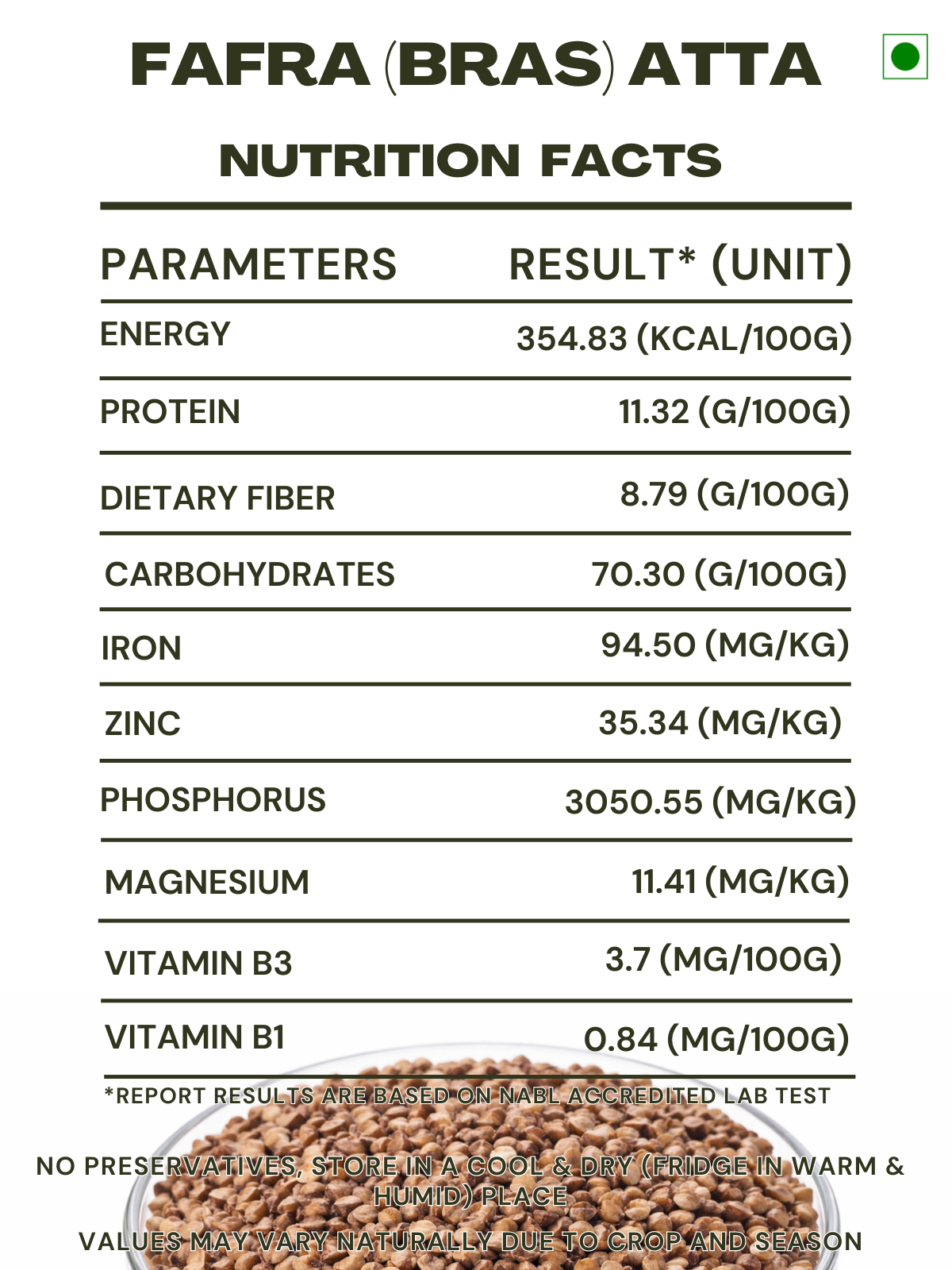
- Rich in plant-based protein and essential amino acids
- High in dietary fiber, supporting digestion and gut health
- Packed with micronutrients like iron, zinc, magnesium, phosphorus and B vitamins
- Naturally gluten-free, making it ideal for those with gluten sensitivities
- Low glycemic index helps maintain steady energy and blood sugar levels
- Supports healthy heart, contains rutin, which aids blood circulation
🍽️ How to Consume
- Everyday cooking: You can make cheela (with vegetables), poori, roti, dosa, pancakes and dumpling base
- Baking: Use buckwheat flour instead of refined flour for making bread, muffins, or cakes
- Local Kinnaur style: We make plain cheela/pancake without any vegetables and eat it with dal, sabzi, or curd like chapati
- You can mix it with your regular flour and consume
🫙 Storage Instructions
- Store in an airtight container.
- Keep in a cool, dry place, away from moisture.
- For a longer shelf life, refrigerate in humid climates.
🌍 Sustainable Impact
Buckwheat is a low-input, climate-resilient crop that grows well in poor soils and requires minimal water. Supporting these heritage Kuttu and Fafra crops helps conserve mountain agro-biodiversity, maintains multi-crop agriculture practices, strengthens local farmer livelihoods, and keeps traditional Himalayan food systems alive in the face of climate change.